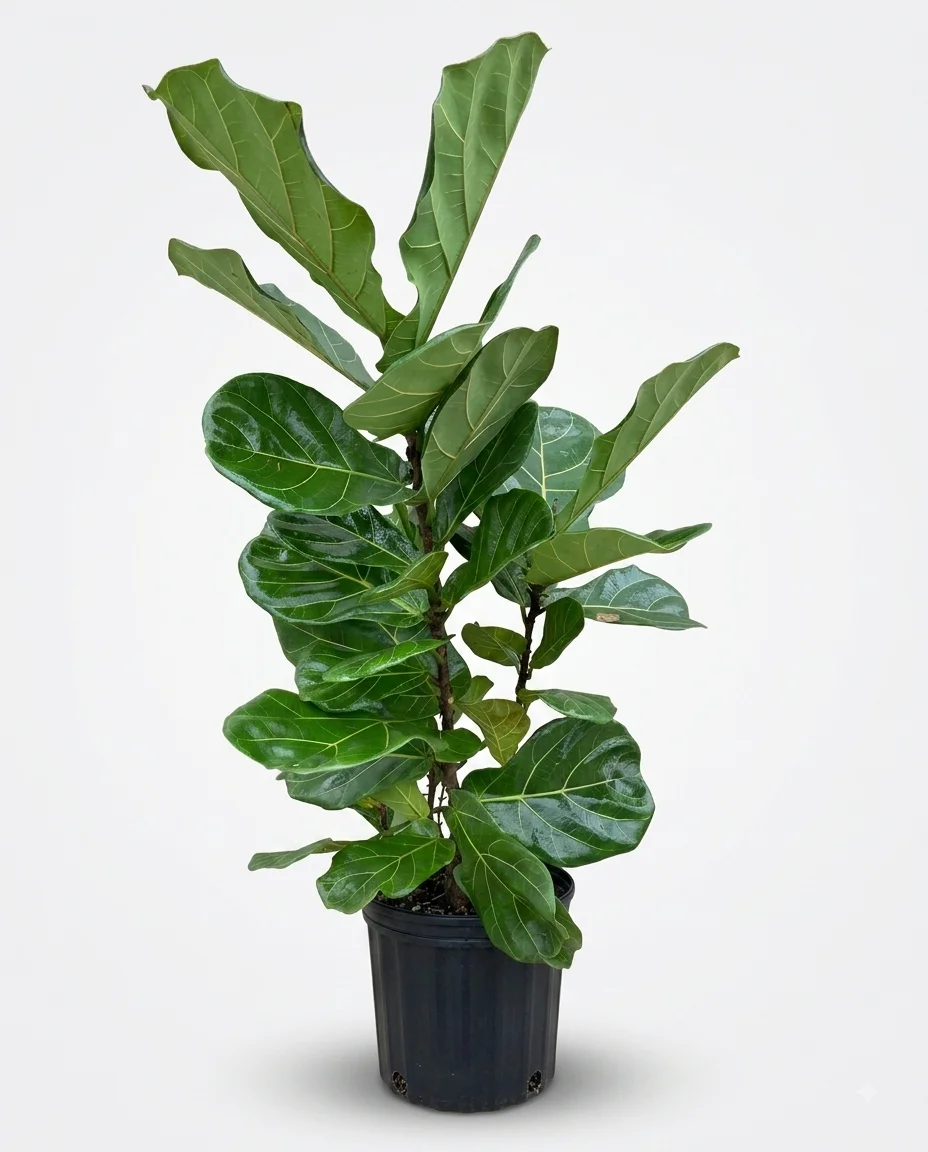
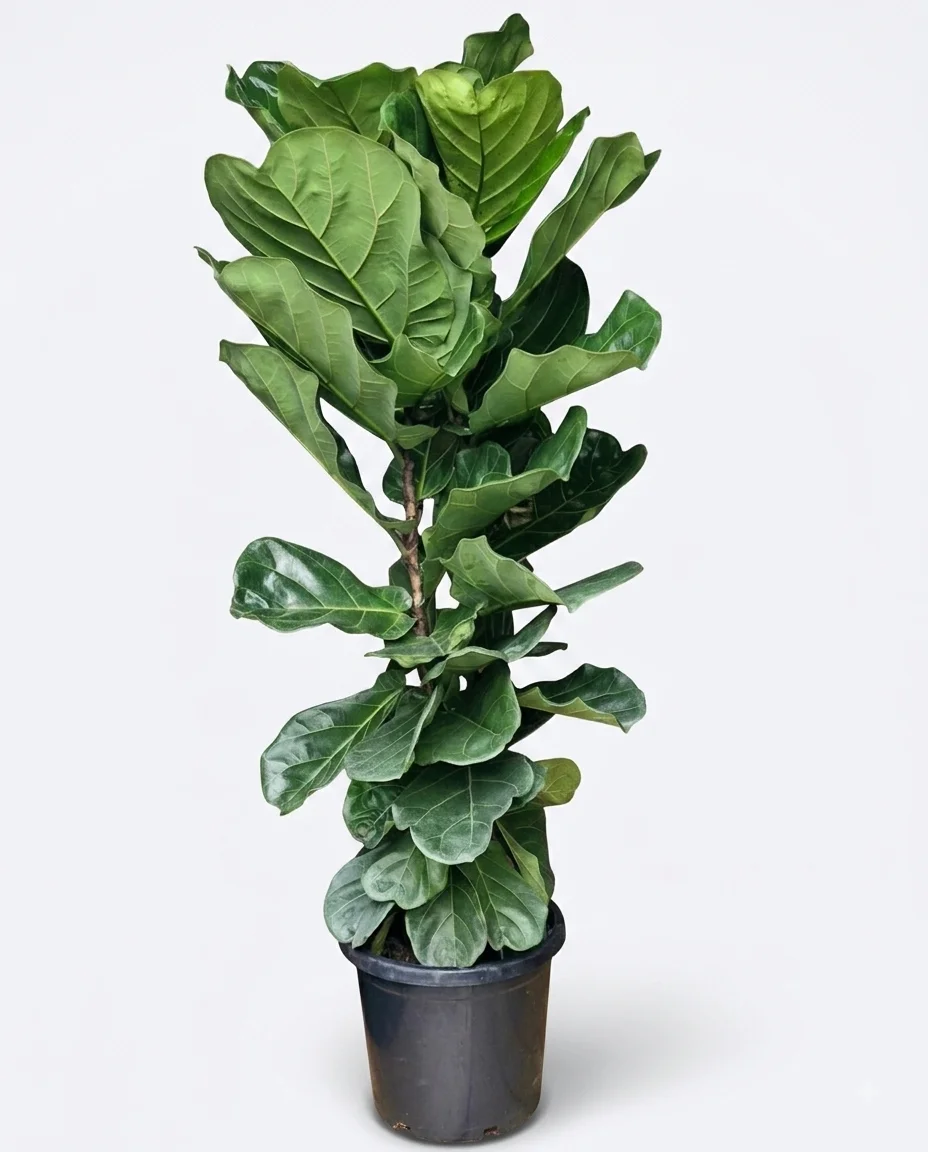
Fiddle leaf fig
Choose Your Plastic Nursery Pot Size
Prices vary by sizeBuying Several Plants?
Get special pricing for larger quantities.
🌿 About This Plant
Plant Information
- Common Name Fiddle leaf fig
- Scientific Name Ficus lyrata
- Category tree, indoorplant
- Mature Size can grow about 1.5–3 m indoors when given good light and enough space
- Growth Rate Moderate
🌱 How to Care for This Plant
Simple and practical care information from Chaka Plants.
Bright, indirect light. A few hours of gentle morning sunlight is beneficial
About once a week
Moderate
Prefers moderate to high humidity but can adapt to normal indoor conditions
Basic Care
The most important daily care requirements for healthy growth.
☀️ Light Requirement
Bright, indirect light. A few hours of gentle morning sunlight is beneficial
💧 Watering Frequency
About once a week
🚿 Practical Watering Instructions
Check the top 5 cm of soil before watering. Water thoroughly when it feels dry, then allow excess water to drain completely
🏡 Best Placement
Place near a bright window with plenty of filtered light. Avoid cold drafts and sudden changes in temperature
Soil & Nutrition
The right soil and feeding routine can help your plant grow stronger.
🪴 Soil Type
Rich, loose and well-drained potting soil
🌿 Fertilizer
Use a balanced liquid fertilizer or slow-release fertilizer
🌍 Soil Requirements
The soil should hold some moisture but drain quickly to prevent root problems
🍃 Feeding Instructions
Feed every 4–6 weeks during active growth. Reduce feeding during cooler periods
Growth & Behavior
Learn how this plant grows and what to expect as it matures.
⚡ Growth Rate
Moderate
📏 Mature Size
can grow about 1.5–3 m indoors when given good light and enough space
🌿 Plant Behavior
Grows upright with a strong central stem or trunk. Regular rotation helps maintain balanced growth toward the light
Environment & Climate
The environmental conditions where this plant can grow best.
🌍 Agro Ecology
Best suited to warm tropical and subtropical conditions
💦 Humidity
Prefers moderate to high humidity but can adapt to normal indoor conditions
Maintenance
Simple maintenance practices to keep your plant healthy and attractive.
✂️ Pruning
Remove damaged leaves and prune unwanted branches to maintain the desired shape
🧹 General Maintenance
Wipe the large leaves regularly to remove dust and help the plant absorb light efficiently
🪴 Repotting
Repot every 1–2 years or when roots become crowded. Choose a pot only slightly larger and make sure it has drainage holes
Propagation
Ways this plant can be propagated or multiplied.
Usually propagated by stem cuttings or air layering. Propagation is most successful during active growth
Best Suitable For
This plant is especially suitable for the following places and uses.
Problems & Treatment
Common problems and practical ways to protect the plant.
💊 Recommended Treatment
Brown leaf edges may indicate dry soil, low humidity or excessive direct sunlight. Yellow leaves are often caused by overwatering. Brown spots can also develop from root problems or inconsistent watering.
✅ What You Should Do
- Give plenty of bright filtered light
- Water only when the soil starts to dry
- Use well-drained soil
- Rotate the pot regularly
- Clean the leaves gently
- Maintain consistent conditions
❌ What You Should Avoid
- Do not overwater
- Do not leave roots sitting in water
- Do not move the plant frequently
- Do not expose it to harsh afternoon sun
- Do not place it in cold drafts
- Do not allow the soil to remain completely dry for long periods
Our Recommendation
Keep Fiddle Leaf Fig in one bright spot and let the soil partly dry before watering. Avoid frequent moving or sudden changes in light and temperature. 🌿
🌿 Related Plants
Need Help Choosing the Right Plant?
Our Chaka Plants team can help you choose plants that are suitable for your home, office, garden or landscaping project.